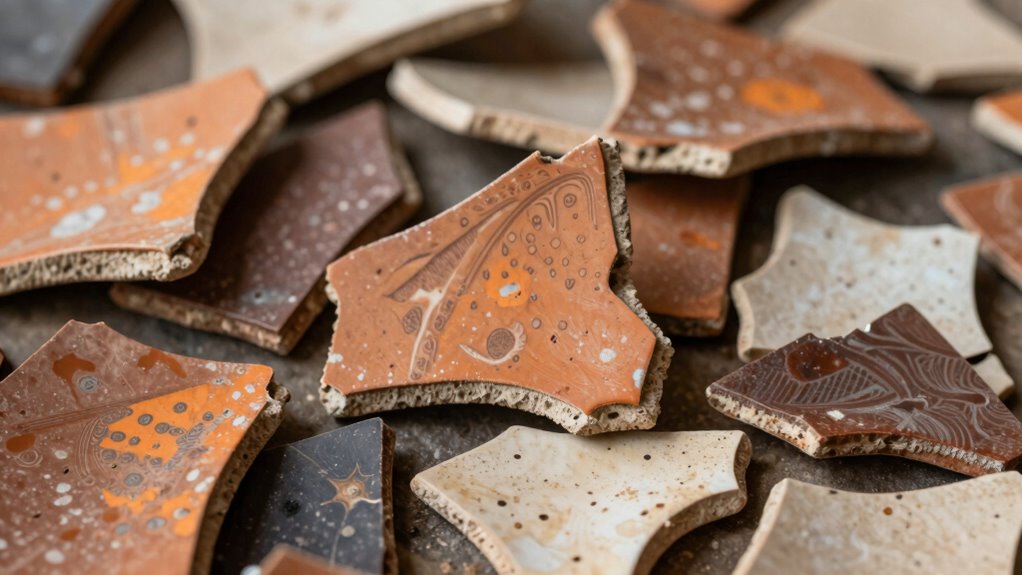

Pottery shards reveal a lot about a civilization’s daily life, trade networks, and cultural identity. As you examine fragments, you’ll uncover clues about technological progress, societal organization, and regional interactions. Different styles and materials point to trade routes and outside influences, showing how connected the society was with others. Analyzing these shards can also highlight how civilizations adapted and evolved over time. Keep exploring further, and you’ll discover even more fascinating stories hidden in these ancient fragments.

Prime made for students and young adults
- Fast, free delivery for dorm and study essentials
- Prime Video and Amazon Music included
- Member-only deals
Key Takeaways
- Pottery shards reveal cultural identities through distinct styles and techniques unique to specific civilizations.
- Analysis of materials and manufacturing methods uncovers technological advancements within societies.
- Trade patterns and material origins in shards map out ancient trade networks and regional interactions.
- Pottery patterns reflect societal development, economic integration, and environmental adaptations over time.
- Examining fragments provides insights into daily life, societal structure, and cultural connections of civilizations.
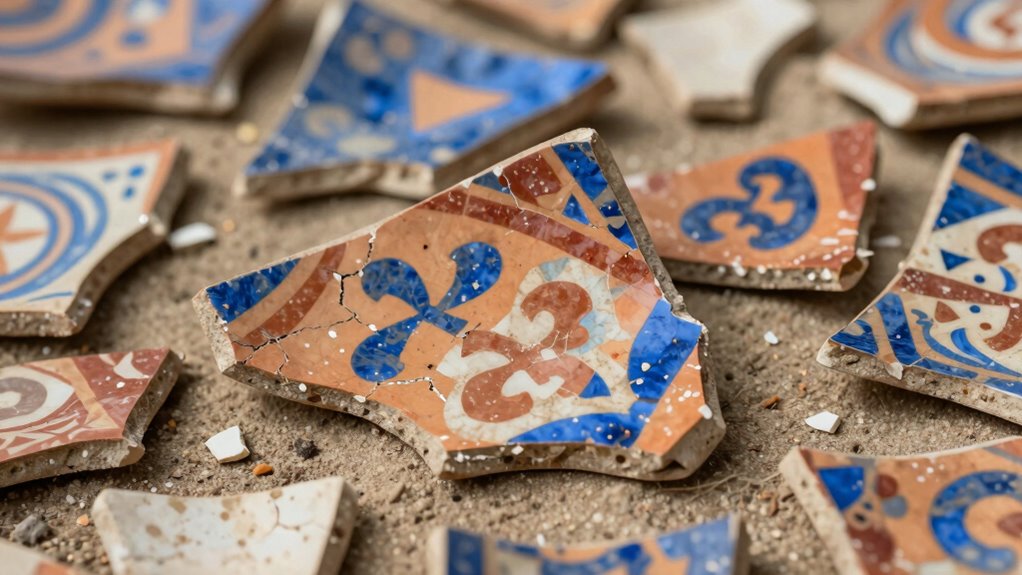
Pottery shards, often overlooked as mere broken fragments, actually hold invaluable clues about ancient civilizations. When you examine these pieces carefully, you uncover stories about how people lived, traded, and connected with each other. One of the most fascinating insights they offer is into trade networks. Different styles, materials, and manufacturing techniques can reveal where a piece originated, even if it was found far from its source. For example, a shard made from clay that only exists in a specific region indicates that the community had established trade routes to acquire such materials. These trade networks weren’t just about exchanging goods; they fostered relationships between distant groups. As you piece together shards from various locations, you start to see a web of interaction stretching across regions, revealing the extent of a civilization’s reach and influence. Trade routes can tell you whether a society was isolated or actively engaged with neighbors, and how far their commerce extended. Additionally, the study of pottery styles and techniques can shed light on technological innovations and cultural identities within these societies. Recognizing trade network evidence in pottery fragments can also provide broader insights into the economic and social integration of ancient communities. The analysis of archaeological artifacts can further enhance our understanding of these connections, giving a more comprehensive picture of societal development. Such analysis helps us understand how civilizations adapted to their environments and maintained sustainable relationships with their surroundings. Examining these shards with care allows archaeologists to identify patterns that reflect technological progress and societal development over time.
As an affiliate, we earn on qualifying purchases.
Frequently Asked Questions
How Are Pottery Shards Dated Accurately?
You can date pottery shards accurately through a combination of ceramic composition analysis and stylistic analysis. Ceramic composition involves examining the mineral content and firing techniques to determine the shard’s age, while stylistic analysis compares decorative patterns and shapes to known periods. By combining these methods, you get a clearer picture of when the pottery was made, helping to date the artifacts precisely and understand the civilization’s timeline.
Can Pottery Shards Indicate Trade Relationships?
Sure, pottery shards are basically ancient Yelp reviews for trade networks. When you analyze their style, composition, and origin, you can trace artifact provenance and see which civilizations exchanged goods. So, next time you find a broken pot, remember it’s not just trash—it’s a breadcrumb trail revealing long-lost trade relationships. These shards tell stories of commerce, cultural exchange, and maybe even who was too lazy to wash dishes.
What Do Pottery Styles Reveal About Cultural Influences?
You can tell a lot about a civilization’s cultural influences by examining pottery styles, especially ceramic decoration and cultural symbolism. Unique patterns, motifs, or colors often reflect the beliefs, rituals, and artistic traditions of a society. When you study these elements, you uncover how different cultures interacted, influenced each other, and expressed their identity through their pottery. This insight helps you understand the deeper cultural and social dynamics at play.
Are Pottery Shards Useful for Reconstructing Ancient Diets?
Pottery shards are incredibly useful for reconstructing ancient diets because they often contain residues of ancient food and cooking techniques. By analyzing these residues, you can identify what types of food people consumed, such as grains or meats, and how they prepared their meals. This helps you understand their dietary habits, nutritional intake, and culinary innovations, giving you a detailed picture of their everyday life and cultural practices.
How Do Preservation Conditions Affect Shard Analysis?
Preservation conditions are the keys to unveiling ancient secrets, like fragile whispers from the past. Environmental factors greatly influence shard analysis, with dry, stable climates preserving pottery longer, while moisture and temperature fluctuations accelerate decay. Preservation challenges arise when these conditions vary, making it harder to study shards effectively. Your understanding of these factors helps archaeologists interpret shards more accurately, revealing insights about civilizations that might otherwise remain hidden in the sands of time.
As an affiliate, we earn on qualifying purchases.
Conclusion
By examining pottery shards, you open a treasure chest of history, revealing stories as vast as the universe itself. These tiny fragments are like cosmic clues, guiding you through ancient civilizations’ daily lives, trade routes, and cultural beliefs. With each shard, you get a glimpse into a world long gone, proving that even the smallest pieces can hold the power to rewrite history’s entire saga. It’s as if you hold the keys to unlocking time itself.
As an affiliate, we earn on qualifying purchases.
As an affiliate, we earn on qualifying purchases.
Halloween Picks
halloween
As an affiliate, we earn on qualifying purchases.