
TL;DR

Prime made for students and young adults
- Fast, free delivery for dorm and study essentials
- Prime Video and Amazon Music included
- Member-only deals
Installation of artificial beaver dams significantly increased juvenile coho salmon survival rates from 8% to 60%. This development offers promising insights for salmon conservation efforts but is based on preliminary data. Further research is needed to confirm long-term impacts.
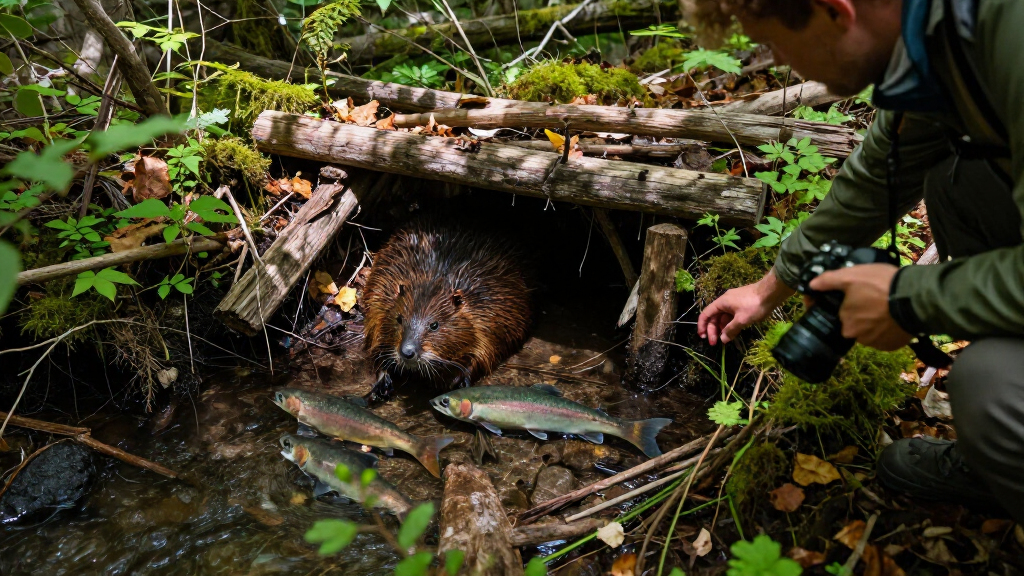
Recent trials involving artificial beaver dams have demonstrated a dramatic increase in juvenile coho salmon survival rates, rising from 8% to 60%, according to preliminary data. This development could have significant implications for salmon conservation efforts, especially in regions where natural beaver activity is limited or disrupted.
The pilot project, conducted in a freshwater habitat known for declining coho salmon populations, installed artificial dams designed to mimic natural beaver structures. The initial results, collected over the past year, show a marked improvement in juvenile salmon survival, which experts attribute to enhanced habitat complexity and improved water quality.
Specifically, the survival rate of juvenile coho salmon increased from a baseline of 8%, observed prior to the installation, to approximately 60% post-installation, based on ongoing monitoring. The artificial dams are engineered to slow water flow, create pools, and promote habitat conditions favorable for young salmon to grow and evade predators.
Researchers involved in the project emphasize that these findings are preliminary but promising. They are now analyzing additional data to determine whether the observed increase in survival rates can be sustained over multiple breeding seasons and whether similar results can be replicated in other habitats.
Potential Impact on Salmon Conservation Strategies
The observed increase in juvenile coho salmon survival rates from 8% to 60% suggests that artificial beaver dams could be a valuable tool in conservation efforts. If these results are confirmed through further studies, such structures could be widely adopted to restore habitat complexity and improve survival outcomes in degraded ecosystems.
This approach may offer a cost-effective, scalable method to support declining salmon populations, which are threatened by habitat loss, climate change, and human activity. Additionally, artificial dams could complement existing conservation measures, such as habitat restoration and hatchery programs, by providing more resilient natural environments for juvenile fish.
However, experts caution that long-term ecological impacts and potential unintended consequences need thorough evaluation before large-scale implementation.
artificial beaver dam for habitat restoration
As an affiliate, we earn on qualifying purchases.
As an affiliate, we earn on qualifying purchases.
Background on Salmon Decline and Habitat Restoration Efforts
Coho salmon populations have been declining in many regions due to habitat degradation, urban development, and climate change. Historically, natural beaver activity played a critical role in maintaining healthy stream ecosystems by creating pools and wetlands that support juvenile fish. However, in recent decades, beaver populations have diminished in some areas, reducing habitat complexity.
Conservationists and scientists have experimented with various habitat restoration techniques, including installing artificial structures to mimic natural beaver dams. While natural beaver dams are known to benefit aquatic ecosystems, their presence is sometimes limited by human activity or land use restrictions.
The recent pilot project is part of a broader effort to explore artificial alternatives that can provide similar ecological benefits, with initial results indicating potential for significant positive impacts on juvenile salmon survival rates.
salmon habitat enhancement structures
As an affiliate, we earn on qualifying purchases.
As an affiliate, we earn on qualifying purchases.
Unconfirmed Long-Term Ecological and Scalability Effects
While initial data shows a marked improvement in juvenile salmon survival, it is not yet clear whether these results will be sustained over multiple years or in different ecological contexts. The long-term ecological impacts of artificial dams, including effects on stream flow, sediment transport, and other species, remain to be thoroughly studied.
Additionally, questions about scalability, cost, and potential land use conflicts are still unresolved. Researchers emphasize that more comprehensive, multi-season studies are needed to validate these early findings and assess broader ecological implications.
juvenile salmon survival habitat products
As an affiliate, we earn on qualifying purchases.
As an affiliate, we earn on qualifying purchases.
Next Steps in Monitoring and Expanding Artificial Dam Use
Researchers plan to continue monitoring the current site over multiple breeding cycles to confirm the durability of the survival rate improvements. They also aim to replicate the project in different habitats to evaluate consistency across environments.
Further studies will focus on ecological impacts, cost-benefit analyses, and potential integration with existing habitat restoration programs. Policymakers and conservation groups are watching closely for results that could inform future habitat management strategies.
As an affiliate, we earn on qualifying purchases.
Key Questions
How do artificial beaver dams improve salmon survival?
They mimic natural beaver structures by creating pools and slowing water flow, which enhances habitat complexity, provides shelter from predators, and improves water quality for juvenile salmon.
Are artificial beaver dams safe for the environment?
Initial studies suggest they can be beneficial, but long-term ecological impacts are still under evaluation. Researchers are carefully monitoring for any unintended effects on stream ecosystems.
Can this method be used in other regions?
Potentially, but effectiveness may vary depending on local conditions. Further testing in diverse habitats is needed before large-scale adoption.
When will more definitive results be available?
Researchers plan to collect multi-year data, with preliminary findings expected within the next 12 to 24 months to confirm sustainability and ecological impacts.
Source: hn
Fall Picks
fall essentials
As an affiliate, we earn on qualifying purchases.