
TL;DR

Prime made for students and young adults
- Fast, free delivery for dorm and study essentials
- Prime Video and Amazon Music included
- Member-only deals
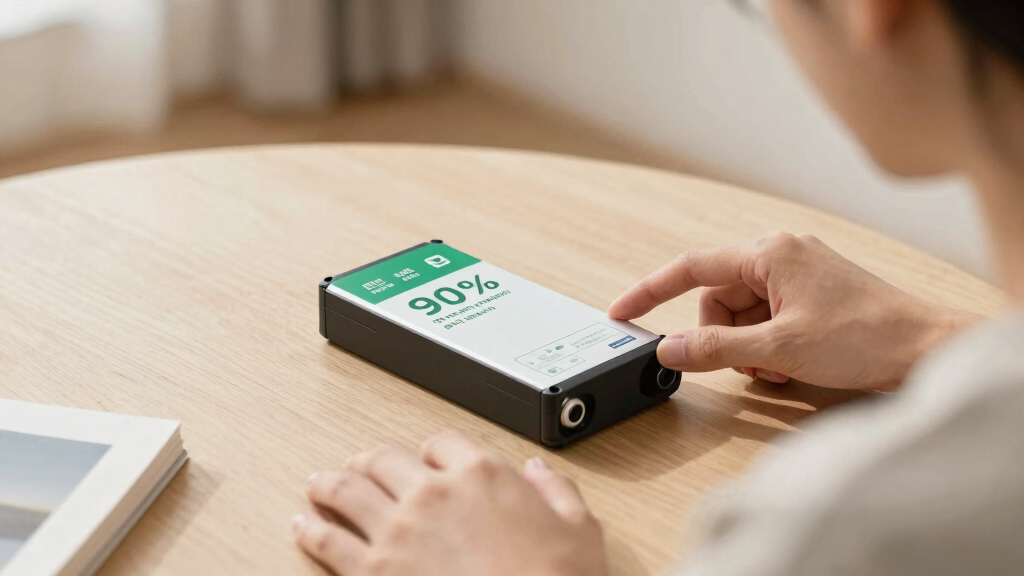
Japan has developed a new recycling process that can recover up to 90% of lithium from used EV batteries. This breakthrough could significantly impact battery sustainability and supply chains.
Japan has unveiled a new recycling technique that can recover up to 90% of lithium from used electric vehicle (EV) batteries, a significant advance in battery recycling technology. This development is designed to address the growing demand for sustainable lithium supply and reduce environmental impact, making it a notable step forward for the EV industry and resource management.
The new method, developed by Japanese researchers and industrial partners, involves an innovative chemical process that efficiently extracts lithium from spent EV batteries. According to the Japan Battery Recycling Consortium, initial tests show recovery rates of up to 90%, surpassing current recycling efficiencies which typically range between 50% and 70%. The process is said to be scalable and environmentally friendly, using less energy and hazardous chemicals compared to traditional methods.
Japan’s Ministry of Economy, Trade and Industry (METI) confirmed that the new technique is in the pilot phase, with plans to commercialize it within the next two years. Industry experts suggest this could reduce Japan’s reliance on imported lithium and support the country’s goal of becoming a leading sustainable battery producer. The development also aligns with global efforts to create circular economies for critical materials used in EV batteries.
Potential Impact on Lithium Supply and Recycling Efficiency
This breakthrough could dramatically improve the sustainability of EV battery recycling, enabling higher recovery rates and reducing environmental damage caused by mining. It may also lessen Japan’s dependence on imported lithium, strengthening its position in the global EV supply chain. For consumers and automakers, this could translate into more sustainable and potentially lower-cost batteries in the future.
electric vehicle battery recycling kit
As an affiliate, we earn on qualifying purchases.
As an affiliate, we earn on qualifying purchases.
Japan’s Growing Focus on Battery Recycling Innovations
Japan has been actively investing in battery recycling technologies amid rising demand for EVs and concerns over lithium resource scarcity. Prior to this development, Japan relied heavily on importing lithium, with recycling rates limited by existing methods. The country has set ambitious targets to increase domestic recycling capacity, with several projects underway since 2022. This new method marks a significant step in Japan’s efforts to become a leader in sustainable battery technology and resource circularity.
“Our new process achieves unprecedented lithium recovery rates while minimizing environmental impact, making it a game-changer for sustainable battery recycling.”
— Dr. Hiroshi Takeda, lead researcher at Japan Battery Recycling Consortium
lithium recovery from EV batteries
As an affiliate, we earn on qualifying purchases.
As an affiliate, we earn on qualifying purchases.
Details on Commercial Implementation and Long-term Efficiency
While the pilot results are promising, it is still unclear when the technology will be fully commercialized and whether it will maintain high recovery rates at larger scales. The long-term environmental and economic impacts of the process are also yet to be evaluated fully. Additionally, how this method compares cost-wise to existing recycling techniques remains to be seen.
As an affiliate, we earn on qualifying purchases.
Next Steps Toward Commercial Deployment and Industry Adoption
Japan plans to transition the process from pilot to commercial scale within the next two years, with ongoing testing to optimize efficiency and cost. Industry stakeholders are expected to monitor these developments closely, and collaborations with battery manufacturers may accelerate adoption. Further research will focus on integrating this recycling method into existing supply chains and assessing its long-term viability.
As an affiliate, we earn on qualifying purchases.
Key Questions
How does this new recycling method differ from current techniques?
The new method achieves up to 90% lithium recovery, higher than traditional processes, by using a novel chemical extraction technique that is more environmentally friendly and scalable.
When will this technology be available for commercial use?
Japan aims to commercialize the process within the next two years, following pilot testing and scaling efforts.
Will this reduce the need for importing lithium?
Potentially, yes. Higher recovery rates could lessen Japan’s reliance on imported lithium, supporting domestic supply and sustainability goals.
Are there any environmental concerns associated with the new process?
The process is described as more environmentally friendly than existing methods, using less energy and hazardous chemicals, but full environmental impact assessments are still underway.
What challenges remain before widespread adoption?
Key challenges include scaling the process to industrial levels, ensuring cost competitiveness, and integrating it into existing recycling infrastructure.
Source: hn
Fall Picks
fall essentials
As an affiliate, we earn on qualifying purchases.
![GPT-5.6 Sol Ultra produces proof of the Cycle Double Cover Conjecture [pdf]](https://curiousminds.info/wp-content/uploads/2026/07/gpt-5-6-sol-ultra-produces-proof-of-the-cycle-double-cover-conjecture-pdf-featured-560x300.jpg)