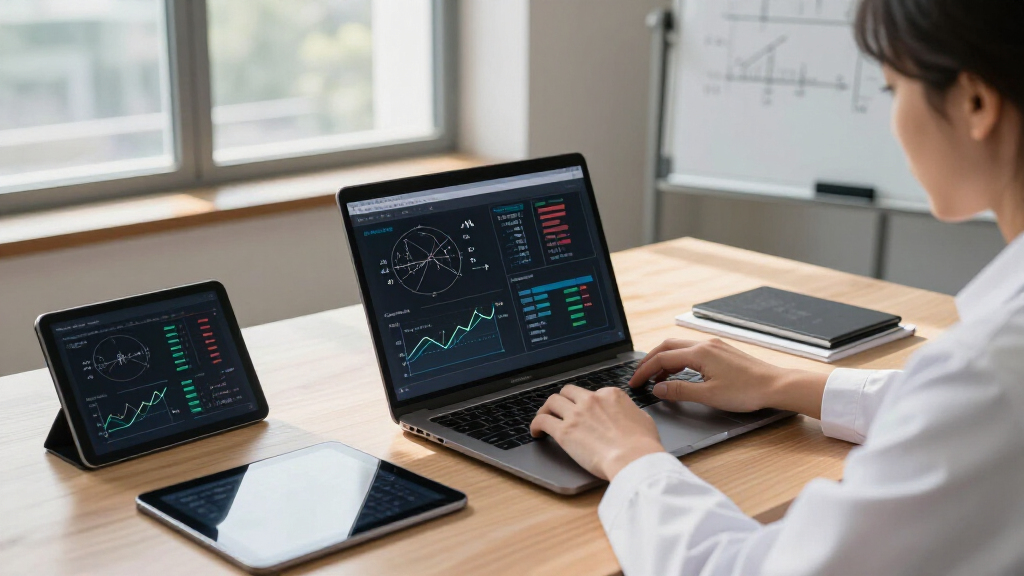
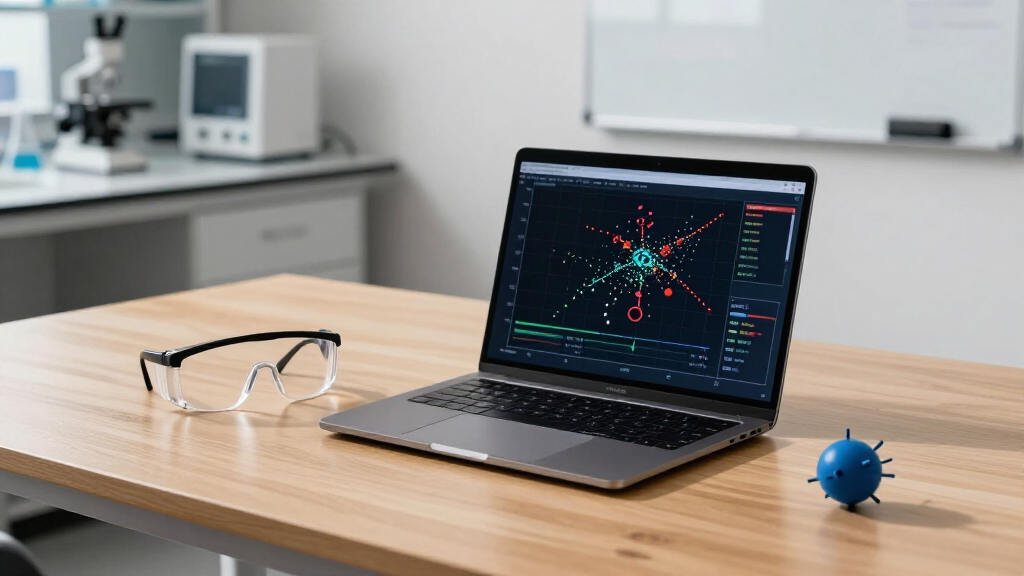
Guided by its display, a home lab oscilloscope measures voltage signals over time, revealing circuit details you won’t want to miss.
Browsing Category
Science & Discovery
77 posts
What Makes Some Materials Super Strong and Super Light
Forces at the atomic level reveal why certain materials are both super strong and super light, unlocking possibilities you won’t want to miss.
How Thermal Cameras Turn Heat Into Useful Information
Thermal cameras detect infrared radiation emitted by objects, which varies with temperature,…
The Weird Physics Behind Why Ice Floats
Fascinating physics explains why ice floats, revealing how its unique structure impacts our environment—discover the surprising reasons behind this icy behavior.
What Digital Microscopes Are Best At—And Where They Fall Short
Finding the perfect balance between clarity and limitations, digital microscopes excel in detailed imaging but may surprise you with their shortcomings—discover why below.
Why Magnification Alone Does Not Make a Better Microscope
Magnification alone doesn’t make a better microscope because qualities like optical clarity…
Compound vs Stereo Microscope: Which One Solves Which Problem?
A comprehensive comparison of compound and stereo microscopes helps you choose the right tool for your specific viewing needs—discover which one suits your tasks best.
What a Trinocular Microscope Lets You Do That Standard Models Do Not
No standard microscope offers the instant high-res imaging and streaming capabilities of a trinocular model, transforming your research or teaching experience—discover how.
Is Time Real? Physics Has a Surprisingly Unsettling Answer
More than just a ticking clock, physics reveals unsettling truths that challenge our perception of whether time is truly real or an illusion.
Why Do Some Animals Glow? The Evolutionary Reason for Bioluminescence
Plants and animals glow through bioluminescence as an evolutionary adaptation to survive, but the true reason behind this dazzling phenomenon is more fascinating than you might think.