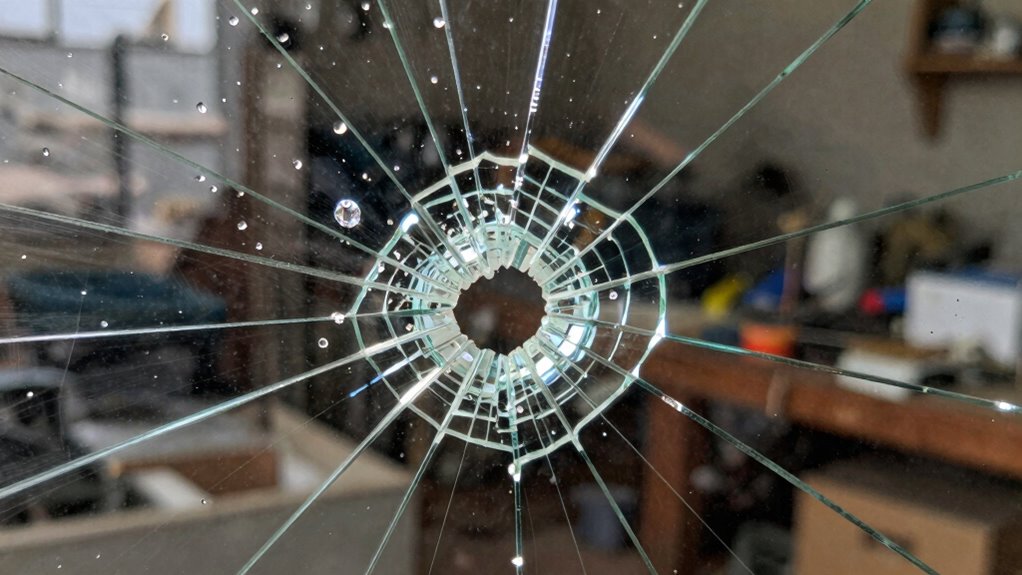

Glass may seem simple and transparent, but it’s actually quite complex. Its atoms are arranged randomly, making it amorphous, which affects how it transmits and bends light. Recycling glass is challenging because different types need to be kept separate; mixing reduces quality. Despite being infinitely recyclable, contamination and sorting issues limit its sustainability. If you stay curious, you’ll uncover even more surprising facts about this fascinating material and its scientific marvels.

Prime made for students and young adults
- Fast, free delivery for dorm and study essentials
- Prime Video and Amazon Music included
- Member-only deals
Key Takeaways
- Glass’s amorphous structure gives it complex optical properties, making it more scientifically intricate than its simple appearance suggests.
- Recycling glass is challenging due to its various compositions, leading to contamination and reduced quality despite its recyclability.
- Advanced nanostructuring can modify glass’s physical and optical properties, revealing its potential for innovative scientific applications.
- Its transparency results from atomic irregularity, making it a unique material with finely tuned optical functionalities.
- Despite being endlessly recyclable, practical hurdles limit sustainable recycling and environmental benefits of glass.
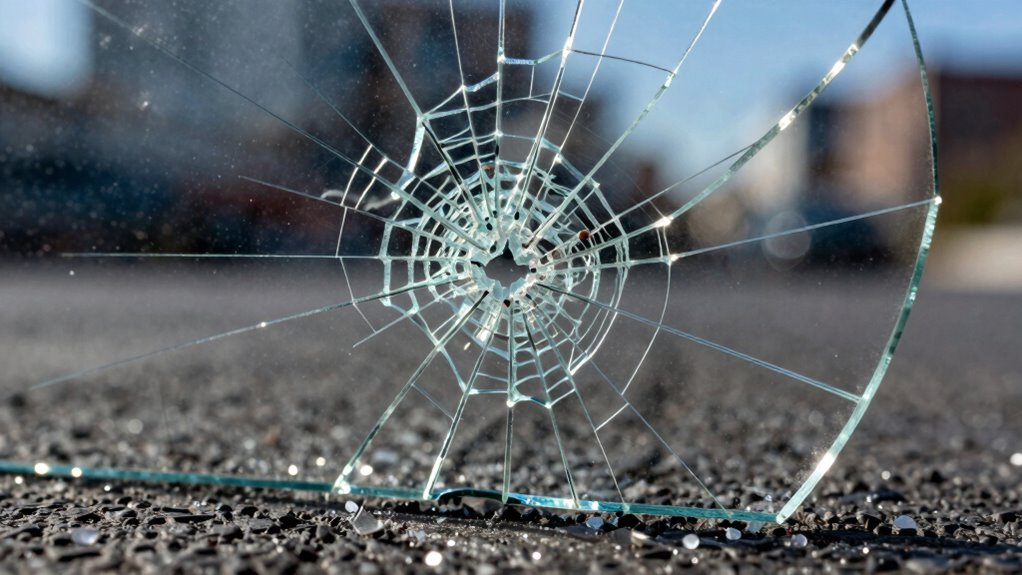
Have you ever stopped to contemplate what glass really is? At first glance, it appears simple—a transparent, solid material you see everywhere. But in reality, glass is a complex substance with fascinating optical properties. Its transparency and ability to bend light without distortion make it invaluable for lenses, windows, and displays. This clarity results from its unique atomic structure, which lacks the regular crystalline arrangement found in most solids. Instead, glass is an amorphous solid, meaning its atoms are arranged randomly. This irregularity allows light to pass through with minimal scattering, giving glass its characteristic transparency. Yet, despite its simplicity to the naked eye, understanding its optical properties reveals a world of scientific intricacies. For instance, glass can be engineered to filter specific wavelengths or to have anti-reflective coatings, enhancing its functionality across various applications. Its ability to transmit, refract, and sometimes even absorb light is what makes it so versatile and essential in modern life. Additionally, the amorphous atomic structure of glass plays a crucial role in its optical and physical properties, making it a unique material among solids. Interestingly, advances in material science continue to uncover innovative ways to modify glass’s properties for specialized uses. In recent years, researchers have explored nanostructuring to further enhance its optical and physical characteristics. This ongoing research highlights how adaptable glass can be through scientific innovation.
However, when it comes to recycling glass, the challenges become more apparent. You might think that recycling glass is straightforward—just melt it down and reshape it. But the reality is far more complicated. Different types of glass, such as soda-lime, borosilicate, or leaded glass, have distinct compositions. Mixing these during recycling can lead to defects, reducing the quality of the final product. This segregation issue creates a significant recycling challenge, requiring careful sorting to ensure purity. Additionally, contaminants like labels, plastics, or residual contents can complicate the process, making it costly and less efficient. While glass is 100% recyclable and can be melted endlessly without losing quality, these practical hurdles mean that not all collected glass gets recycled properly. Often, contaminated or mixed glass ends up in landfills or is downcycled into products of lesser quality. This creates a paradox: despite its recyclability, glass’s recycling challenges hinder its sustainability potential. Improving recycling techniques and increasing public awareness are vital steps toward overcoming these hurdles.
In essence, what makes glass so intriguing is not just its physical appearance but its complex scientific properties and the societal challenges surrounding its lifecycle. Its optical properties reveal a material finely tuned by science, yet its recycling challenges remind us that even simple materials can have complicated environmental footprints. So next time you handle a glass bottle or window, remember that beneath its transparent surface lies a world of scientific marvels and sustainability hurdles, making glass truly stranger than it seems.
As an affiliate, we earn on qualifying purchases.
Frequently Asked Questions
How Is Glass Actually Made From Sand?
You start by transforming sand, which is primarily silica, through heating it to extremely high temperatures. This sand transformation causes the silica to melt and become a liquid. When cooled rapidly, the molten silica forms glass, with a specific composition that includes other ingredients like soda ash and limestone to optimize transparency and strength. This process creates the smooth, transparent material we use for windows, bottles, and more.
Can Glass Be Recycled Infinitely Without Loss?
Glass can be recycled endlessly without losing its clarity or quality, acting like a chameleon that never fades. This continuous cycle helps reduce environmental impact, conserving resources and energy. Recycling processes melt the glass back into a molten state, ready to be shaped again and again. By embracing this eternal dance of reuse, you help protect our planet, turning glass into a sustainable resource that never truly disappears, only transforms.
Why Does Glass Sometimes Appear to Be Solid and Other Times Liquid?
Glass appears solid because of its rigid atomic structure, but it’s actually an extremely slow-moving supercooled liquid. Its transparency and optical properties allow light to pass through smoothly, giving it a solid look. Over long periods, especially at the edges or older panes, you might see slight flow or thinning, making it seem liquid. This unique behavior results from its amorphous structure, blending solid and liquid traits in a fascinating way.
What Are the Most Unusual Types of Glass in History?
You’ll find that some of the most unusual types of glass in history include Roman mosaic glass, which features intricate patterns, and latticino glass from Venice, known for its decorative white and colored threads. Historical innovations like Lalique glass showcase artistic creativity, while cultural significance is evident in stained glass windows that tell stories and inspire awe. These types reveal the fascinating blend of craftsmanship and tradition across civilizations.
How Does Glass Influence Modern Technology and Design?
Glass plays a vital role in modern technology and design by offering optical clarity, which enhances screens and displays you rely on daily. It also provides transparent insulation, improving energy efficiency in buildings and gadgets. You benefit from its durability and sleek aesthetics, making devices more attractive and functional. Innovations in glass, like flexible and smart variants, continue to shape how you interact with technology and experience modern design.
recyclable glass storage containers
As an affiliate, we earn on qualifying purchases.
As an affiliate, we earn on qualifying purchases.
Conclusion
By now, you see that glass isn’t just a fragile window or a sleek bottle—it’s a marvel of nature’s secrets. Its strange, almost magical properties defy what you’d expect, making it seem like something out of a sci-fi story. Next time you hold a glass, remember it’s a silent superhero, constantly changing and hiding mysteries that boggle the mind. Glass is truly stranger than you think, a shimmering enigma that’s brighter than a thousand suns.
borosilicate glass baking dishes
As an affiliate, we earn on qualifying purchases.
As an affiliate, we earn on qualifying purchases.
As an affiliate, we earn on qualifying purchases.
Halloween Picks
halloween
As an affiliate, we earn on qualifying purchases.