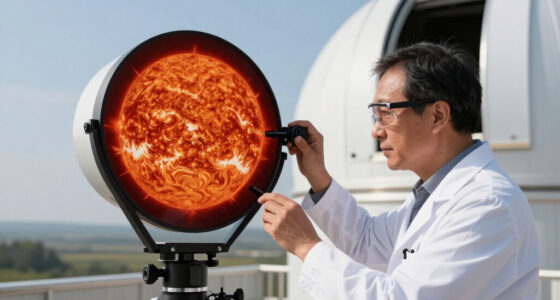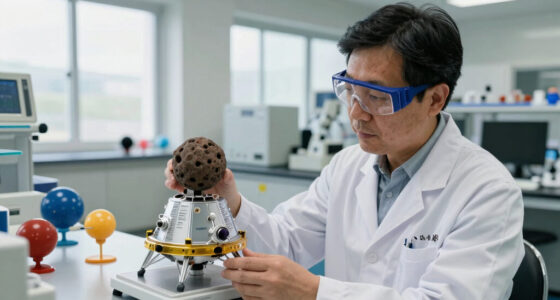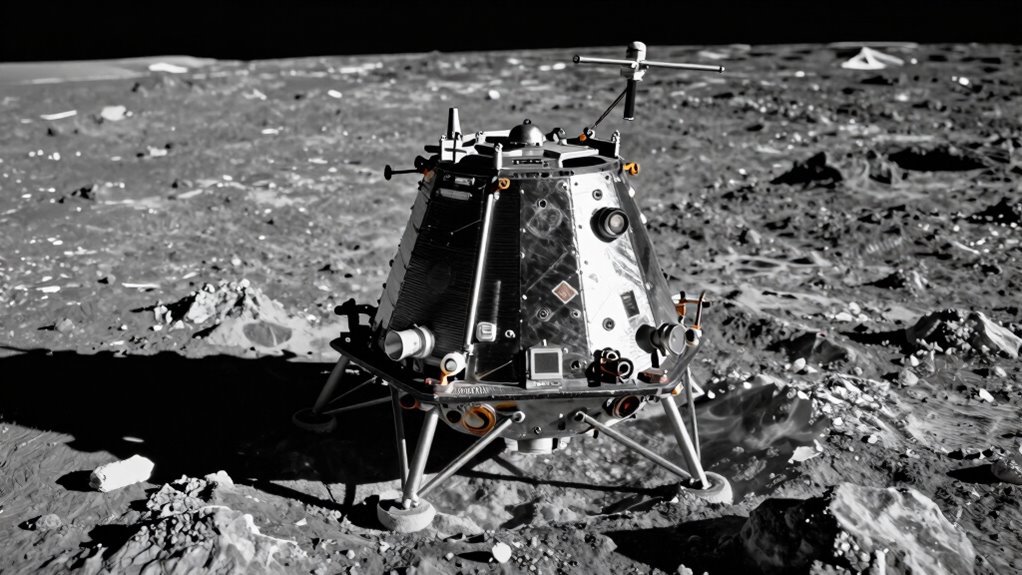

You might wonder how space probes survive in the solar system’s harshest places. They’re built with advanced radiation shields made of aluminum and specialized composites to protect sensitive electronics from high-energy particles. Thermal regulation systems help manage extreme temperatures through reflective coatings, insulating blankets, and active heaters. These integrated systems work together to keep the probe’s components safe and functioning properly. If you keep exploring, you’ll discover more about the innovative designs that make this possible.

Get school and study supplies delivered free — and shop member deals
- Fast, free delivery on millions of items
- Access to Prime Big Deal Days deals on October 6–7
- Prime Video, Amazon Music and more included
Key Takeaways
- Space probes employ radiation shielding materials like aluminum and composites to protect sensitive electronics from high-energy particles.
- Thermal regulation systems, including reflective coatings and heaters, maintain stable temperatures amid extreme heat and cold.
- Radiation-hardened components prevent damage and data corruption caused by intense space radiation.
- Integration of protective systems ensures components operate reliably despite temperature swings and radiation exposure.
- Advanced materials and meticulous engineering extend mission lifespan in the hostile environments of the solar system.
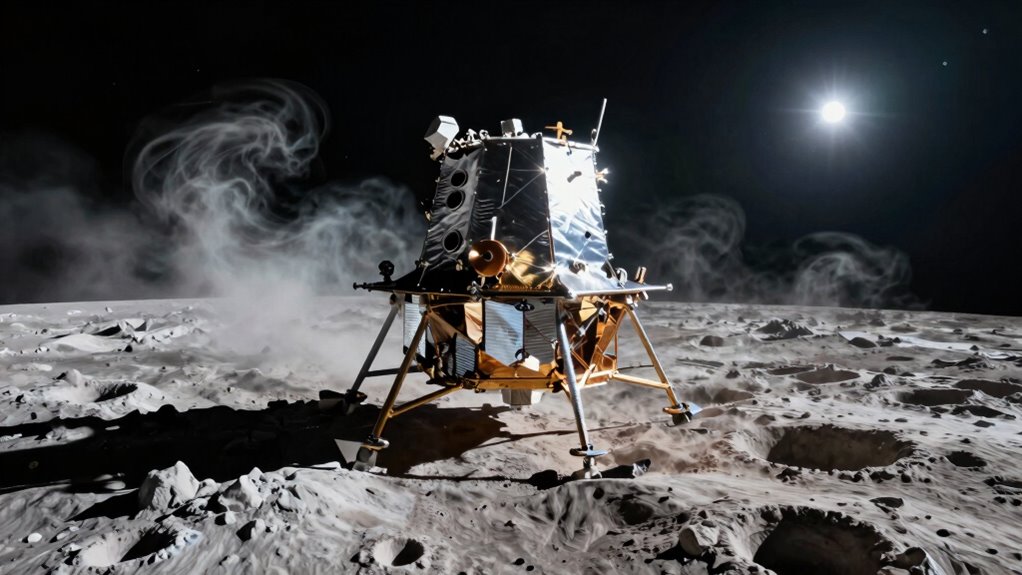
Have you ever wondered how space probes survive the harsh conditions of our solar system? It’s a combination of advanced engineering and smart design that keeps these machines operational despite extreme challenges. One of the most critical issues they face is radiation. Space probes are constantly bombarded by high-energy particles from the Sun, cosmic rays, and other sources. To withstand this, engineers equip them with radiation shielding — materials like aluminum or specialized composites that absorb or deflect harmful particles before they reach sensitive electronics. This shielding is essential because, without it, radiation could damage onboard systems, cause data corruption, or even disable the probe entirely.
But radiation protection isn’t the only hurdle. Temperature swings in space are equally brutal. When a probe is exposed to direct sunlight, temperatures can soar to hundreds of degrees Fahrenheit, while in shadow, they can plummet to near absolute zero. To manage this, space probes rely on thermal regulation systems. These systems use a combination of passive and active methods to maintain a stable internal temperature. Passive methods include reflective coatings and insulating blankets that reflect sunlight and trap heat inside. They help keep the internal components from overheating or freezing. Active thermal regulation involves devices like heaters, radiators, and heat pipes. Heaters kick in during cold periods to keep electronics warm, while radiators vent excess heat into space during hot periods. Sometimes, the probes have louvers or adjustable panels to control heat radiation, guaranteeing the internal environment stays within operational limits. Incorporating radiation-hardened components further enhances their durability against space radiation.
Every component on a space probe is designed with these environmental factors in mind. The radiation shielding protects against particle bombardment, allowing delicate instruments to function properly. Meanwhile, the thermal regulation system ensures that electronics operate efficiently without being damaged by temperature extremes. These systems work together seamlessly, often in real-time, to adapt to changing conditions as the probe travels through different regions of the solar system. You might think of it as a constant balancing act—shielding from radiation while carefully controlling temperature—so that the probe can continue its mission for years or even decades. Additionally, engineers incorporate thermal regulation systems to maintain optimal internal temperatures and prevent damage from the harsh environment. The development of advanced materials plays a crucial role in improving the resilience of these systems, enabling probes to withstand even more severe conditions.
Ultimately, it’s this meticulous engineering—combining effective radiation shielding and precise thermal regulation—that makes it possible for space probes to survive and operate in the most hostile environments we’ve ever sent machines into. Without these innovations, exploring distant planets, moons, and beyond would be impossible. Thanks to their robust design, you can trust that these probes keep transmitting essential data, helping you learn more about the universe, one mission at a time.
radiation shielding materials for electronics
As an affiliate, we earn on qualifying purchases.
As an affiliate, we earn on qualifying purchases.
Frequently Asked Questions
How Do Probes Endure Extreme Radiation Levels?
You rely on cosmic radiation shielding to protect your probes from intense radiation, preventing damage to sensitive electronics. Engineers design these spacecraft with thick, specialized materials, and sometimes include active shielding techniques. Additionally, your probes are built for solar flare resilience, with systems that can withstand sudden bursts of radiation. These strategies guarantee your probes operate effectively even in the harshest environments, maintaining their mission integrity over long durations.
What Materials Are Used to Withstand Intense Temperature Fluctuations?
You might think extreme temperatures would destroy probes, but they’re built to withstand this. Thermal insulation and heat-resistant coatings shield the equipment, creating a barrier against rapid temperature changes. These materials reflect, absorb, and dissipate heat efficiently, preventing damage. Think of it as a high-tech thermal suit that keeps the probe’s delicate instruments safe, even when facing the scorching heat of Mercury or the freezing cold of outer space.
How Do Probes Handle Long-Term Power Supply Challenges?
You rely on advanced solar panels with high efficiency to generate power over long missions, even in weak sunlight. Thermal insulation helps protect the probes’ components from extreme temperature changes, conserving energy. You also incorporate rechargeable batteries to store excess power during sunny periods, ensuring continuous operation. These combined strategies enable probes to handle long-term power challenges, maintaining functionality and collecting essential data in the harshest environments of the solar system.
What Communication Methods Ensure Data Transfer in Harsh Conditions?
Ever wonder how data gets through in those extreme environments? You rely on advanced methods like quantum encryption to keep communication secure and intact. Data compression helps send more information with less power and bandwidth. These techniques, combined with robust radio signals, ensure your probes maintain reliable contact, even in harsh conditions. This way, you’re confident that your valuable data reaches Earth accurately, no matter the cosmic challenges.
How Are Probes Protected From Micrometeoroid Impacts?
You protect probes from micrometeoroid impacts by using shielding materials like Whipple shields, which absorb and disperse energy. Impact sensors detect when a micrometeoroid strikes, allowing onboard systems to activate protective measures or record the event. These shields are layered to minimize damage, ensuring the probe’s instruments stay safe. This combination of shielding materials and impact sensors helps your probe endure the harsh environment of space.
thermal insulation blankets for electronics
As an affiliate, we earn on qualifying purchases.
As an affiliate, we earn on qualifying purchases.
Conclusion
Like Odysseus braving treacherous seas, space probes face the universe’s fiercest challenges. Their resilience, built with ingenuity and advanced technology, allows them to explore the unknown and reveal cosmic secrets. As you marvel at their journeys, remember that these brave explorers push boundaries much like explorers of old, venturing into the darkness with hope and curiosity. In their silent voyage, they remind us that even in the harshest places, discovery is always within reach.
space probe thermal regulation systems
As an affiliate, we earn on qualifying purchases.
As an affiliate, we earn on qualifying purchases.
radiation-hardened electronic components
As an affiliate, we earn on qualifying purchases.
As an affiliate, we earn on qualifying purchases.
Halloween Picks
halloween
As an affiliate, we earn on qualifying purchases.