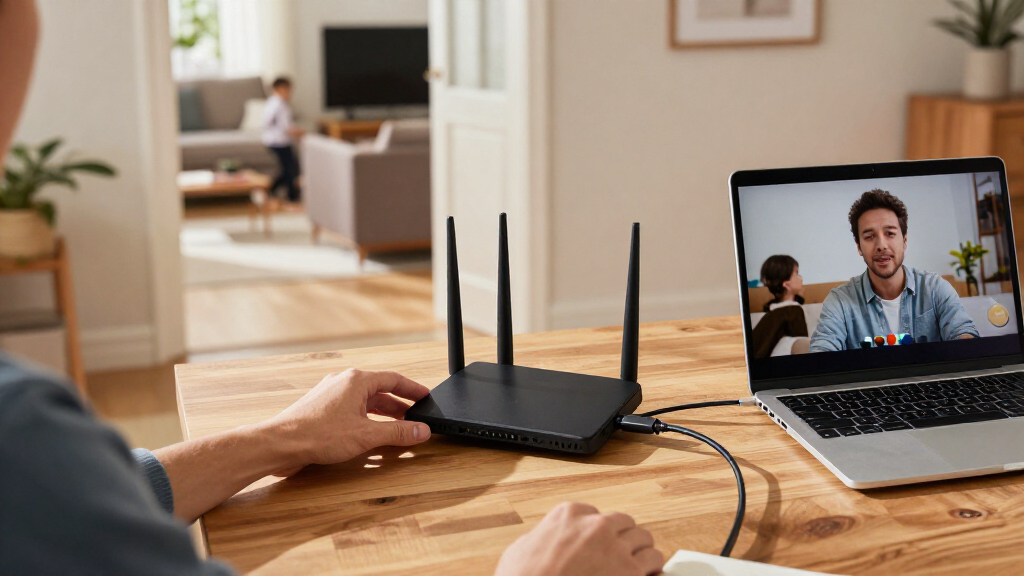

🔍 Read the full analysis: 2027 Guide: 9 Best Wi-Fi 7 Routers For Speedier Home Networking on ThorstenMeyerAI.com

Prime made for students and young adults
- Fast, free delivery for dorm and study essentials
- Prime Video and Amazon Music included
- Member-only deals
TL;DR
A source comparison of nine Wi-Fi 7 routers puts the TP-Link Archer BE550 first for its tri-band design and practical wired connections. It also names options for gaming-focused, simpler and other tri-band setups, while stressing that router specifications do not guarantee real-world speed or coverage.
The original buyer’s guide names the TP-Link Archer BE550 its best overall Wi-Fi 7 router, citing its tri-band design and practical mix of wired connections. The comparison covers nine models, from a premium quad-band gaming router to simpler dual-band choices, and says buyers should match features to their devices, home layout and wired equipment rather than assume the Wi-Fi 7 label guarantees faster service.
The guide places the ASUS ROG Rapture GT-BE98 Pro in a specialist role, pointing to its quad-band capacity and gaming-focused router features. It describes the TP-Link Archer BE230 as an entry-level option for smaller or less demanding networks. These are editorial recommendations, not guarantees of performance in a particular home.
The other six models in the comparison are the NETGEAR BE9300, TP-Link BE600, TP-Link Archer BE400, ASUS RT-BE82U, NETGEAR RS90 and NETGEAR RS140. The source groups the BE9300 and BE600 among tri-band alternatives and describes the BE400, RT-BE82U, RS90 and RS140 as dual-band options. It does not provide detailed test results or a full model-by-model speed and port specification table.
According to the guide, its ranking considers band configuration, wired connectivity and features alongside the complexity of setup, considerations also explored in this Wi-Fi 7 router roundup. The broad-use emphasis favors the BE550; the GT-BE98 Pro is aimed at a narrower audience, while dual-band models may suit households that do not need more wireless capacity. The guide cautions that advertised capabilities are selection clues, not promises of actual results.
The 9 picks
- 1
 ASUS ROG Rapture GT-BE98 Pro Quad-Band WiFi 7 Gaming RouterView on Amazon →
- 2
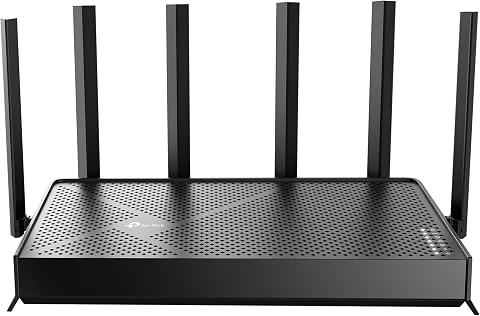 TP-Link Archer BE600 Tri-Band Wi-Fi 7 RouterView on Amazon →
- 3
 NETGEAR Nighthawk BE9300 Tri-Band WiFi 7 RouterView on Amazon →
- 4
 TP-Link Archer BE550 Tri-Band Wi-Fi 7 RouterView on Amazon →
- 5
 NETGEAR Nighthawk RS140 Dual-Band WiFi 7 RouterView on Amazon →
- 6
 ASUS RT-BE82U Dual-Band Wi-Fi 7 RouterView on Amazon →
- 7
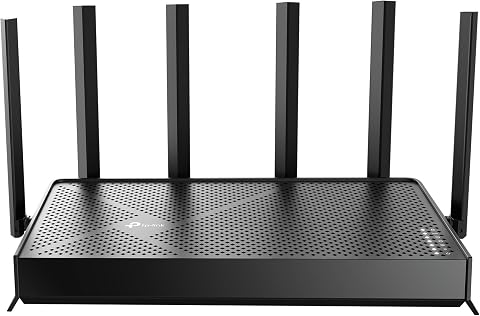 TP-Link Archer BE400 BE6500 Dual-Band Wi-Fi 7 RouterView on Amazon →
- 8
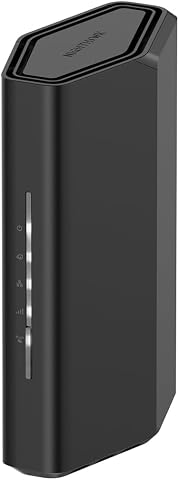 NETGEAR Nighthawk RS90 WiFi 7 Dual-Band RouterView on Amazon →
- 9
 TP-Link Archer BE230 Dual-Band Wi-Fi 7 RouterView on Amazon →
Choosing Features That Fit Your Home
The comparison matters because a router’s headline standard alone does not reveal whether it will solve a household’s network problem. A home with many active wireless clients may value the flexibility of a tri-band router, while a smaller network may not make use of the extra band. Someone connecting a desktop, storage device or other wired equipment may care more about the number and speed of ports than a small difference in wireless specifications.
Compatibility also shapes the value of an upgrade. Older devices can connect to a Wi-Fi 7 router, the source says, but they do not gain every Wi-Fi 7 feature. And if the main complaint is a weak signal in a distant room, walls, placement and the possibility of adding mesh or access-point coverage may matter more than buying a router with a higher advertised capacity.
Popular right now

Apple AirPods Pro 3 Wireless Earbuds with Active Noise Cancellation

Ninja Crispi Glass Air Fryer (Stone) – 4‑in‑1

Breville BES870XL Barista Express Espresso Machine, Brushed Stainless Steel
As an affiliate, we earn on qualifying purchases.
How the Guide Ranks Its Nine Picks
The source frames its list as a needs-based comparison, not a ranking based solely on maximum advertised speed. It weighs two-, three- and four-band designs, wired-port suitability and whether features fit everyday household use, gaming or a more involved network. It says its top overall position reflects balance across those factors.
The guide also says results depend on home construction, router placement, client hardware and internet service speed. It does not include a dated lab-testing methodology, measured throughput figures, prices or detailed evidence supporting individual performance claims in the supplied material. Readers should treat the ordering as the source’s editorial judgment, not an independently verified benchmark.
Performance Depends on the Setup
The source does not state when its comparisons or testing were conducted, and the supplied material does not report measured speeds, prices or test conditions for the nine routers. It is unclear how the models compare in specific room layouts, under simultaneous traffic or with particular internet plans. The guide’s labels—such as best overall and premium gaming choice—are recommendations, not independently established results.
It is also not clear which devices a prospective buyer owns or what speed their internet service and wired equipment can deliver. A Wi-Fi 7 router cannot by itself make an older client use features that client does not support, or remove coverage problems caused by walls and distance. Actual results will vary by client compatibility, placement and network conditions.
Check Devices, Ports and Coverage
Before choosing among the nine models, buyers should check which devices they expect to use, what wireless standards those devices support, and which connections must be wired. They should compare port types and speeds with their internet plan and equipment, then consider whether router placement or coverage expansion is the real priority.
The supplied guide does not announce further testing or a follow-up date. A decision based on this comparison should therefore be checked against current model specifications, availability and pricing before purchase. Those details, along with the home’s layout and client mix, will determine whether the BE550’s balance, a more specialized router or a simpler dual-band option is the better fit.
Key Questions
Which router does the guide recommend overall?
It selects the TP-Link Archer BE550, citing its tri-band design and practical mix of wired connections. That is the guide’s recommendation, not a guarantee it will be best in every home.
Which model is aimed at gaming-focused setups?
The guide identifies the ASUS ROG Rapture GT-BE98 Pro as the specialist option, pointing to its quad-band capacity and gaming-focused controls. It says many households may not need that scale or added complexity.
Does a Wi-Fi 7 router make older devices faster?
Older Wi-Fi clients can connect, according to the source, but they do not gain every Wi-Fi 7 capability. The benefit depends partly on whether the devices being used support the newer features.
Should I choose a router with more bands?
Not automatically. The guide says band count is a way to distribute wireless capacity, not a direct promise of speed. Consider how many devices are active at once and whether they can use the available bands.
Will one Wi-Fi 7 router fix a dead zone?
Not necessarily. Walls, floors and placement affect coverage, and the guide says a single router may still leave distant rooms with a weak signal. Check placement and mesh or access-point options if coverage is the main problem.
Source: ThorstenMeyerAI.com