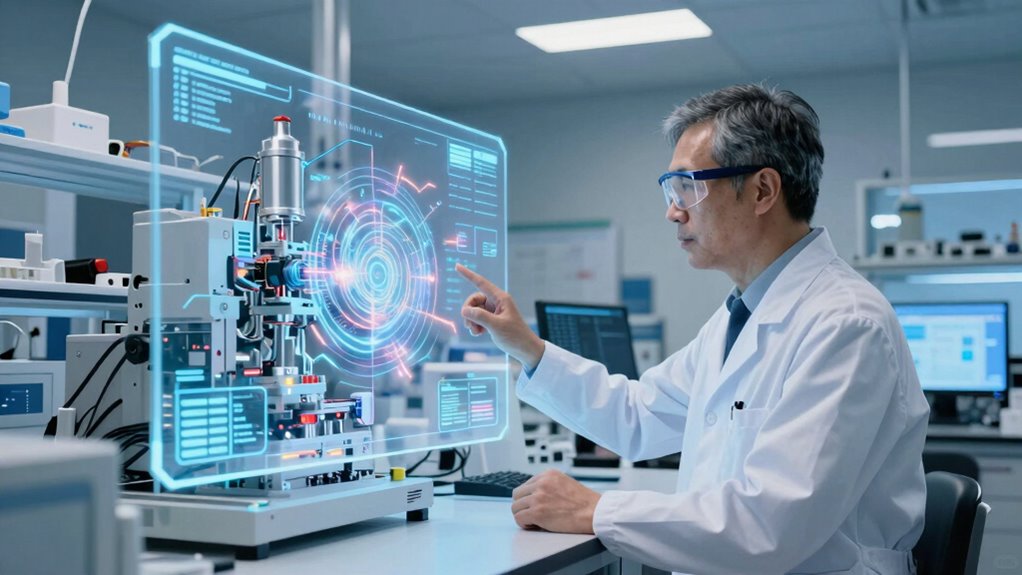

Digital twins are virtual copies of real-world assets that update constantly using sensor data. You can see how they monitor, analyze, and help optimize physical equipment by mimicking its behavior in real time. AI plays a key role, learning from data to predict issues and suggest improvements. This seamless data flow keeps your digital twin accurate and reliable, making it an essential tool for smarter decisions. Stay with us to uncover how all these elements come together.

Prime made for students and young adults
- Fast, free delivery for dorm and study essentials
- Prime Video and Amazon Music included
- Member-only deals
Key Takeaways
- Digital twins are virtual models that replicate physical assets to monitor and optimize their performance.
- They use sensors to collect real-time data, ensuring the digital twin reflects current physical conditions.
- Artificial intelligence analyzes sensor data for insights, predictions, and identifying anomalies.
- Continuous data flow enables simulations, troubleshooting, and proactive maintenance without risking actual assets.
- The combined use of data and AI creates a dynamic, real-time virtual replica that improves over time.
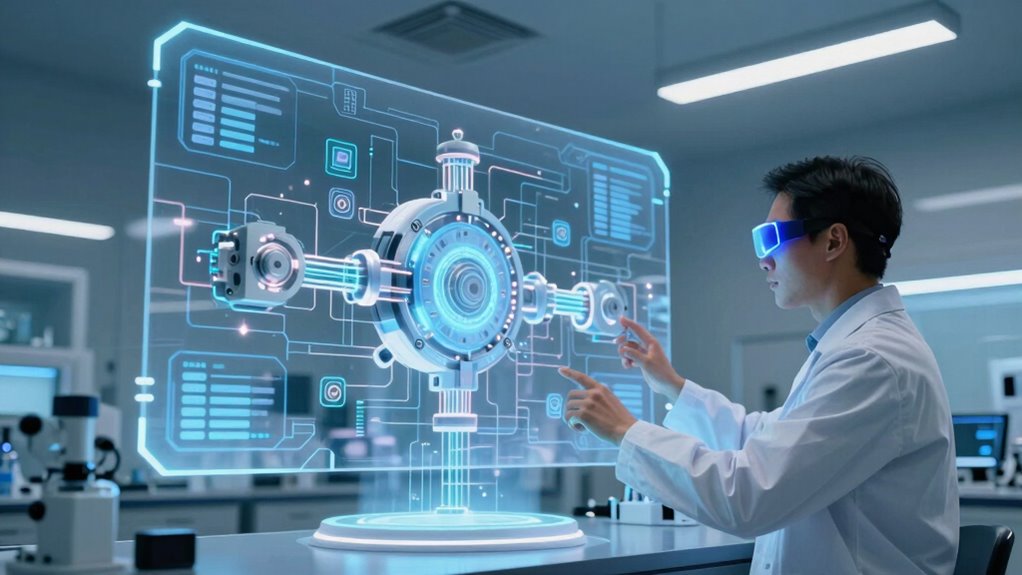
Digital twins are transforming the way industries understand and manage complex systems by creating precise virtual replicas of physical assets. These digital counterparts allow you to monitor, analyze, and optimize real-world operations without constant physical intervention. At the core of this technology lies artificial intelligence, which powers the twin’s ability to learn from data, predict outcomes, and suggest improvements. AI processes vast amounts of information gathered from sensors embedded in the physical asset, helping you identify patterns or anomalies that might otherwise go unnoticed. By doing so, you gain actionable insights that enhance efficiency, reduce downtime, and extend the lifespan of equipment.
Digital twins use AI and sensor data to optimize operations, prevent failures, and extend equipment lifespan.
A vital element of digital twins is data synchronization. This process makes certain that the virtual model remains an accurate reflection of the real-world asset in real-time. Sensors continuously feed data into the twin, capturing everything from temperature and pressure to vibration and wear. The twin then updates itself instantaneously, mirroring changes in the physical system. This constant synchronization allows you to perform simulations, troubleshoot issues, and predict failures without physically interacting with the asset. It’s like having a live, dynamic blueprint that adapts as conditions change, providing you with an all-encompassing view of performance at any moment. Understanding data flow is crucial to appreciating how digital twins operate seamlessly across digital and physical environments.
You don’t need to be a tech expert to understand that this seamless data flow is what makes digital twins so powerful. It bridges the gap between the physical and digital worlds, leveraging artificial intelligence to interpret data and make intelligent decisions. For example, if a sensor detects a slight increase in temperature, the twin can analyze historical data, determine if it’s a sign of a potential problem, and suggest maintenance before the issue escalates. This proactive approach minimizes costly repairs and prevents unexpected failures. The AI algorithms also learn over time, improving their accuracy and predictive capabilities as they process more data. Additionally, the real-time data synchronization is what enables the twin to adapt quickly to changing conditions and keep its virtual model aligned with the physical asset.
In essence, digital twins combine sophisticated AI with real-time data synchronization to create a living model of your assets. This model serves as a virtual testing ground, enabling you to experiment with modifications or predict future states without risking actual equipment. As technology advances, the simplicity of the science behind digital twins becomes more apparent: it’s about creating a continuous, intelligent connection between physical and digital worlds. This connection empowers you to make smarter decisions, optimize operations, and innovate faster than ever before. Data synchronization is the key process that ensures the twin remains a reliable and dynamic mirror of real-world conditions.
Popular right now

Breville Bambino Espresso Machine, Brushed Stainless Steel

Ninja Flip Toaster Oven and Air Fryer, 8-in-1, Stainless Steel, SP151

Shark Rocket Pet Plus Corded Stick Vacuum, Bordeaux, HV322
As an affiliate, we earn on qualifying purchases.
Frequently Asked Questions
How Do Digital Twins Improve Real-Time Decision-Making?
Digital twins improve real-time decision-making by providing a virtual simulation of physical assets, allowing you to monitor and analyze performance instantly. With data synchronization, the twin stays updated with real-world changes, giving you accurate insights. This enables you to identify issues early, optimize operations, and adapt quickly. By using digital twins, you make more informed decisions faster, reducing risks and boosting efficiency across your processes.
What Industries Benefit Most From Digital Twin Technology?
You’ll find that industries like manufacturing, healthcare, and urban planning benefit most from digital twin technology. They use virtual modeling to create precise replicas of physical assets, enabling better management. Data synchronization guarantees real-time updates, helping you monitor performance and predict issues before they occur. This seamless integration improves efficiency, reduces costs, and enhances decision-making, making digital twins invaluable across sectors that rely on complex systems and precise data.
How Secure Are Digital Twin Data Environments?
Digital twin data environments are generally secure, but your confidence depends on robust cybersecurity measures and data privacy practices. Think of it like safeguarding a valuable treasure; you want encryption, regular updates, and strict access controls in place. While no system is completely invulnerable, implementing all-encompassing cybersecurity strategies minimizes risks, ensuring your digital twin data remains protected from cyber threats and unauthorized access, giving you peace of mind.
Can Digital Twins Predict Future System Failures Accurately?
Digital twins can predict future system failures with a good level of predictive accuracy, especially when data reliability is high. You should understand that their accuracy depends on the quality and completeness of the data fed into them. When you guarantee reliable data collection and continuously update the digital twin, it becomes more effective at forecasting issues before they happen, helping you prevent costly failures and optimize system performance.
What Are the Main Challenges in Implementing Digital Twins?
Implementing digital twins can feel like trying to solve a thousand-piece puzzle in a storm. Your biggest challenges are data integration, where syncing diverse data sources becomes a complex maze, and scalability challenges, as growing systems demand more resources and advanced infrastructure. Overcoming these hurdles requires seamless data management and flexible technology solutions, ensuring your digital twin remains accurate and effective as your operations expand—and keeps up with your ambitious goals.
Conclusion
So, next time you think digital twins are just fancy simulations, remember—they’re actually your real-world’s secret mirror. While they seem like simple copies, they hold the power to predict, optimize, and even prevent disasters. Ironically, it’s this “simple” science that’s transforming complex industries, proving that sometimes, the smallest ideas can have the biggest impact. Embrace your digital twin, and maybe, just maybe, it’ll save your day before you even know there’s a problem.