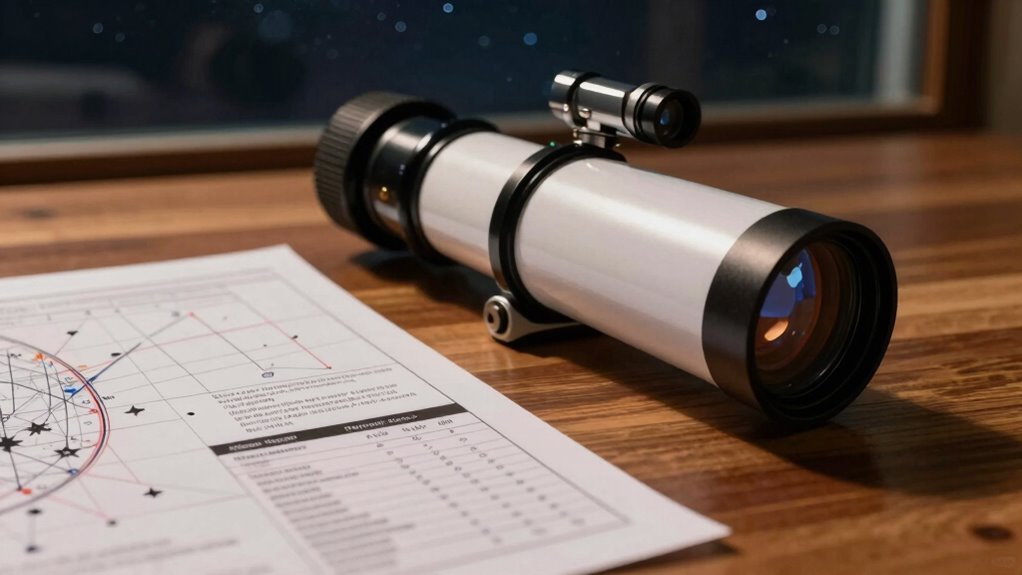

To understand telescope specs, start with the aperture size—larger ones let you see fainter objects and capture sharper images. Check the focal length to know its magnification potential; longer focal lengths mean higher magnification. Note the focal ratio to see if it’s suited for wide-field or detailed observation. Also, consider the mount type for stability during use, and size or weight for portability. Keep these key factors in mind, and you’ll be well on your way to choosing the right scope. If you keep exploring, you’ll find even more helpful tips.

Prime made for students and young adults
- Fast, free delivery for dorm and study essentials
- Prime Video and Amazon Music included
- Member-only deals
Key Takeaways
- Focus on aperture size to understand light-gathering ability and image sharpness.
- Check focal length and ratio to determine magnification potential and suitability for your goals.
- Identify mount type and stability for tracking accuracy and vibration reduction.
- Consider size and weight to assess transportability and setup ease.
- Review maintenance needs to ensure optics remain clean and performance stays optimal.
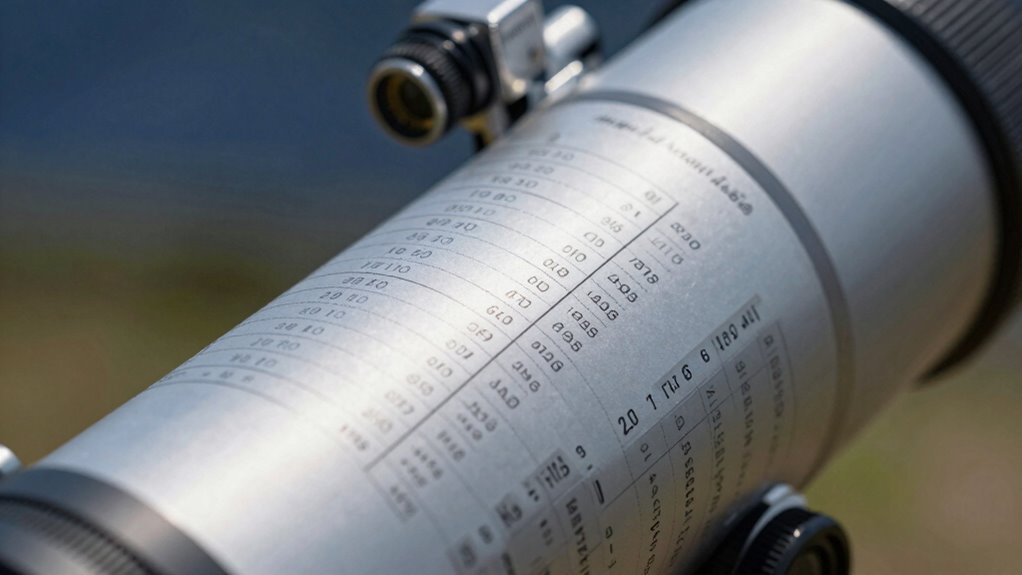
Ever wonder what all those numbers and terms on a telescope’s specifications actually mean? When you’re shopping for a telescope, it’s easy to feel overwhelmed by the technical jargon. But understanding these specs is essential to choosing the right instrument and making the most of your stargazing experience. First, focus on the aperture size—this is the diameter of the main lens or mirror, usually measured in millimeters or inches. A larger aperture allows you to see fainter objects and provides sharper images, which is especially helpful if you’re into astrophotography techniques. The aperture directly impacts your ability to capture detailed images of planets, nebulae, or galaxies, so don’t overlook this critical number.
Understanding aperture size helps you see fainter objects and capture sharper images in your astrophotography.
Next, consider the focal length, which determines the telescope’s magnification potential and field of view. A longer focal length means higher magnification, ideal for detailed planetary views, but it can narrow your field of view. If you’re interested in wide-field astrophotography, a shorter focal length might serve you better. The focal ratio, or f/number, is another important term; it’s the focal length divided by the aperture. A lower f/ratio (like f/4 or f/5) indicates a faster telescope, which gathers more light in less time—perfect for astrophotography techniques that require shorter exposure times. When reading specs, keep this in mind, as it influences both your imaging quality and setup speed.
Telescope maintenance tips come into play once you’ve chosen your instrument. Regularly cleaning your optics with proper tools and techniques keeps images sharp and prevents dust from degrading your views. Learn to handle your equipment carefully, avoiding harsh chemicals or rough cloths. When it comes to reading specs, also pay attention to the mount type—equatorial or alt-azimuth—as it affects tracking accuracy during long exposures, essential for astrophotography. A sturdy mount ensures stability, minimizes vibrations, and helps you achieve clearer images. Additionally, understanding mount stability can help you select a setup that minimizes movement and maximizes image quality during observations. Proper optics care can extend the lifespan of your telescope and maintain optimal performance over time. Being aware of the weight and size of your telescope can also influence how easily you can transport and set up your equipment for different observing sessions.
Finally, understand that the overall size and weight of the telescope matter, especially if you plan to transport it or set it up frequently. Knowing the specs helps you match your needs with your experience level and available space. Additionally, familiarizing yourself with the aperture size can help you select the best telescope for your specific observing goals. Armed with a clear grasp of these terms, you can confidently navigate telescope specs without getting lost, making smarter choices that enhance your astronomical adventures and astrophotography techniques. The more you understand these details, the better you can maintain your telescope and capture stunning images of the cosmos.
best telescope for astrophotography
As an affiliate, we earn on qualifying purchases.
As an affiliate, we earn on qualifying purchases.
Frequently Asked Questions
What Is the Best Telescope for Beginner Stargazing?
The best telescope for beginner stargazing is a beginner-friendly refractor or a compact Dobsonian. These models are easy to use and versatile, making them ideal for various sky conditions. Consider your budget and choose a telescope that offers good magnification without breaking the bank. A lightweight, stable scope helps you enjoy clear views, even if your sky conditions aren’t perfect. This way, you’ll explore the stars with confidence.
How Do I Choose the Right Magnification?
Think of choosing the right magnification as finding your telescope’s sweet spot, like Goldilocks. Start with eyepiece selection that offers a comfortable view, typically around 20x to 50x for beginners. Remember, your telescope’s magnification limits mean going higher won’t always improve clarity. Stay within these limits, and you’ll enjoy sharp images without frustration. Adjust the eyepiece until you find a balance that reveals celestial details clearly.
What’s the Difference Between Refractor and Reflector Telescopes?
Refractor telescopes use lenses, while reflector telescopes rely on mirrors; their optical design differs considerably. Refractors are low maintenance but can be pricier and prone to chromatic aberration. Reflectors are more affordable and easier to maintain with simple cleaning, but require regular alignment (collimation). Your choice depends on your observing needs and willingness to perform maintenance. Both designs offer unique advantages for stargazing and astrophotography.
How Important Is the Aperture Size?
Think of aperture size as the engine powering your telescope’s performance. A larger aperture gathers more light, revealing fainter objects and sharper images, making optical quality shine. It’s also essential for detailed viewing. However, even a big aperture needs a stable mount to prevent shaky images. So, prioritize a sizable aperture combined with a sturdy mount for the best viewing experience.
Do I Need Accessories to Use My Telescope Effectively?
You don’t necessarily need accessories to use your telescope, but they can enhance your experience. Make certain your telescope’s mounting type suits your observing style—altazimuth for simple tracking or equatorial for detailed astrophotography. Also, check eyepiece compatibility to guarantee you can use different lenses for varying magnifications. Investing in essential accessories like additional eyepieces or a sturdy mount can make stargazing smoother and more enjoyable.
As an affiliate, we earn on qualifying purchases.
Conclusion
Now that you know how to decode telescope specs, you’re ready to pick the perfect instrument for your stargazing adventures. Remember, understanding these details isn’t just about numbers; it’s about revealing the universe’s mysteries. Trust your research, and you’ll find a telescope that matches your curiosity and goals. So go ahead—explore the night sky confidently, knowing you’ve got the knowledge to read specs like a pro and discover celestial wonders firsthand.
As an affiliate, we earn on qualifying purchases.
As an affiliate, we earn on qualifying purchases.
Halloween Picks
halloween
As an affiliate, we earn on qualifying purchases.