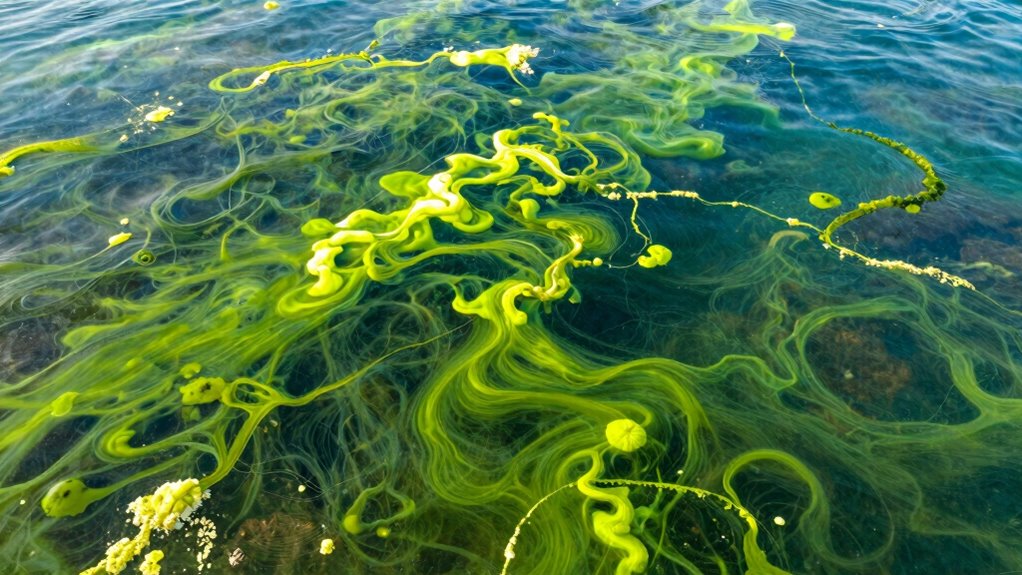

Algae blooms can explode quickly when nutrient runoff from fertilizers and heavy rains provide abundant food, fueling rapid growth. Warmer water temperatures accelerate algae’s metabolism and reproduction, creating perfect conditions for harmful species to thrive. When these factors combine, algae multiply exponentially, blocking sunlight and depleting oxygen, which harms aquatic life. Understanding how nutrients and temperature work together helps you see why these blooms can happen so suddenly. Keep exploring to uncover more about preventing these disruptive events.

Prime made for students and young adults
- Fast, free delivery for dorm and study essentials
- Prime Video and Amazon Music included
- Member-only deals
Key Takeaways
- Excess nutrients like nitrogen and phosphorus fuel rapid algae growth when they enter water bodies.
- Warm water temperatures accelerate algae metabolism and reproduction rates.
- The combination of high nutrients and warm temperatures creates a self-reinforcing bloom.
- Dense algae layers block sunlight and deplete oxygen, harming aquatic ecosystems.
- Harmful algae species thrive under these conditions, producing toxins that exacerbate environmental impacts.
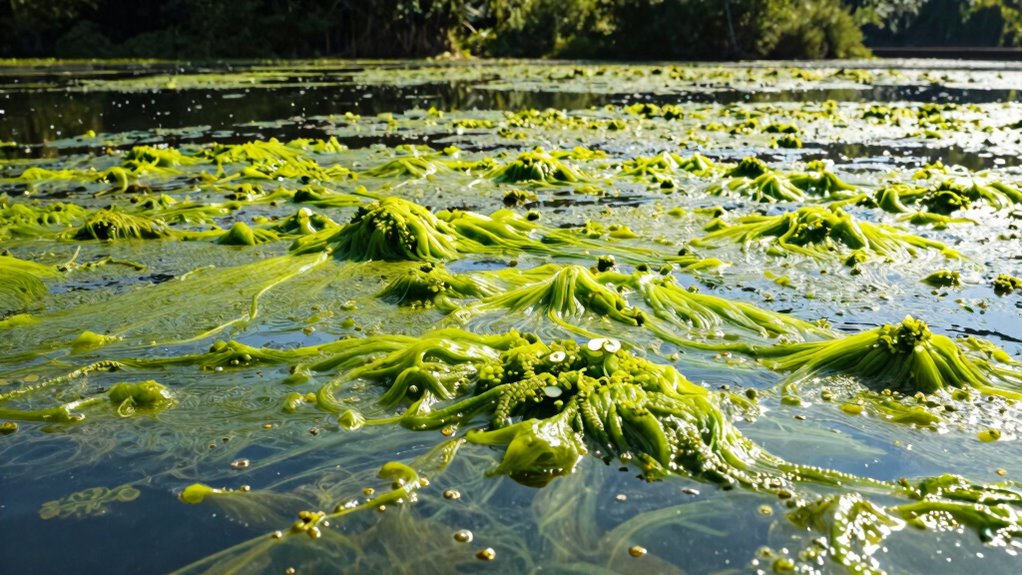
Algal blooms are expanding at an alarming rate, often overwhelming ecosystems in a matter of days. When conditions are just right, algae can grow exponentially, turning clear waters into thick, green mats that threaten aquatic life. One of the main triggers for this rapid expansion is nutrient runoff. During heavy rains or when fertilizers are applied too close to water bodies, excess nutrients like nitrogen and phosphorus wash into lakes, rivers, and ponds. These nutrients serve as a feast for algae, fueling their growth far beyond normal levels. The more nutrients available, the faster algae can multiply, creating dense blooms that block sunlight and deplete oxygen in the water, which can kill fish and other aquatic organisms. Additionally, nutrient-rich environments create ideal conditions for harmful algae species to dominate, increasing the risk of toxin production.
Algal blooms rapidly overwhelm ecosystems due to nutrient runoff and favorable environmental conditions.
Water temperature plays a vital role in the speed of algal bloom development. Warmer water heats up the algae’s environment, accelerating their metabolic processes and reproduction rates. As temperatures rise, algae become more active and proliferate at a much faster pace. This is why blooms tend to occur more frequently during summer months or in regions experiencing unseasonably warm weather. Elevated water temperatures also create a more hospitable environment for certain types of algae, especially harmful species that can produce toxins. These toxins can cause significant harm to wildlife, pets, and even humans if contaminated water is consumed or comes into contact with skin. Understanding how temperature influences algal growth emphasizes the importance of monitoring water conditions to prevent rapid bloom development.
You might notice that when nutrient runoff coincides with higher water temperatures, the situation worsens dramatically. The combination creates a perfect storm for rapid algae growth**. The process is self-reinforcing: as algae grow and die, they release more nutrients into the water, further fueling the bloom. Plus, the thick algae layers block sunlight from reaching underwater plants, disrupting the entire aquatic ecosystem and causing oxygen levels to plummet. Recognizing the roles of nutrient levels and temperature interactions helps explain why some algae blooms seem to explode seemingly overnight. Nutrient runoff provides the raw material, while higher water temperatures accelerate their growth. When both occur simultaneously, you get a rapid, overwhelming bloom that can devastate waterways. Managing nutrient inputs and monitoring water temperatures are essential steps toward preventing these destructive events. Recognizing how these elements interact gives you insight into how quickly and easily algae can take over a water body, underscoring the importance of proactive environmental management. Additionally, addressing water quality issues can help mitigate the severity and frequency of harmful algal blooms**.
As an affiliate, we earn on qualifying purchases.
Frequently Asked Questions
How Do Algae Reproduce so Rapidly During Blooms?
You see algae reproduce rapidly during blooms because they utilize photosynthetic efficiency to convert sunlight into energy efficiently. This process allows them to grow quickly, especially when nutrients like nitrogen and phosphorus are abundant. As they reproduce, some produce algal toxins, which can harm aquatic life and humans. Their quick reproduction is fueled by ideal sunlight, warm temperatures, and nutrient-rich waters, enabling explosive growth in a short time.
What Specific Nutrients Trigger Sudden Algal Growth?
Imagine a sudden flood of fertilizer washing into a pond—this is how specific nutrients trigger rapid algal growth. Nitrogen and phosphorus, often from nutrient sources like agriculture runoff and pollution impact, fuel algae’s explosion. These nutrients act like a spark, igniting algae to multiply quickly. When these nutrient levels spike, you see blooms develop in days, turning water green and murky.
Do Weather Patterns Influence the Speed of Algal Blooms?
Yes, weather patterns substantially influence how quickly algal blooms develop. Warmer water temperatures caused by climate change create ideal conditions for algae to grow rapidly. Extended periods of sunshine and calm weather also reduce water circulation, trapping nutrients and promoting bloom explosions. You’ll notice that in hotter, still weather, algae can multiply faster, turning water vibrant green in just a matter of days.
Can Algal Blooms Spread to New Areas Quickly?
Algal blooms can spread rapidly, like a wildfire racing through dry grass. You might notice a bloom in one spot, then suddenly see it in neighboring areas. Ocean currents act as conveyor belts, dispersing algae swiftly across vast distances. This algal dispersal allows blooms to jump from one region to another, sometimes within days, making it essential to monitor current patterns to predict and manage their spread effectively.
How Long Do Algal Blooms Typically Last?
Algal blooms typically last a few weeks to several months, depending on conditions like nutrient levels, water temperature, and sunlight. During their lifecycle, algae grow rapidly, reaching a peak before nutrients deplete or environmental factors change. Effective bloom management involves reducing nutrient runoff and controlling water temperature to shorten bloom duration. You can help by limiting fertilizer use and supporting sustainable practices to prevent prolonged algal outbreaks.
As an affiliate, we earn on qualifying purchases.
Conclusion
So, now you see how nutrient overloads, warm weather, and still waters all team up to turn your lake into an algae explosion faster than a spaceship launch. It’s like the 1969 moon landing all over again—sudden, dramatic, and hard to control. If you want to keep your water clear and algae in check, you’ll need to stay vigilant and act quickly, just like those brave astronauts tackling the unknown. Don’t let algae be the next big space race!
As an affiliate, we earn on qualifying purchases.
Water temperature monitor for lakes
As an affiliate, we earn on qualifying purchases.
As an affiliate, we earn on qualifying purchases.
Halloween Picks
halloween
As an affiliate, we earn on qualifying purchases.